
Team CPR: Coordinated Multi-Rescuer Response for Adults, Children, and Infants
Build true team CPR proficiency for every age group. Train to current AHA guidance with Work Readiness Center—hands-on courses in Atlanta that elevate team performance and outcomes.
Team CPR: A Practical Guide to High‑Performance, Multi‑Rescuer Response
Team CPR focuses on how multiple rescuers work in sync during cardiac arrest—assigning roles, communicating clearly, and executing high‑performance compressions and ventilations with minimal pauses. Grounded in the latest American Heart Association guidance, coordinated team-based care improves compression fraction, reduces hands‑off time, and speeds AED use to boost survival.
At Work Readiness Center, an Official American Heart Association (AHA) Training Center serving Cumming, GA and the greater Atlanta metro area, we develop team CPR skills through realistic scenarios, timed rotation drills, and feedback-enabled manikins. Learners practice as a unit—adult, child, and infant cases included—so each participant can lead, assist, and hand off effectively under pressure.
What Makes Team CPR Different?
Team CPR is the choreography of resuscitation: a simple, repeatable structure that clarifies who compresses, who ventilates, who manages the AED, and who leads. This approach ensures critical actions happen fast and in the right order, even in noisy or crowded environments.
Core elements of effective team CPR include:
- Immediate role assignment and leadership
- Closed‑loop communication for every order and task
- High‑quality compressions with timed rescuer rotations
- Seamless integration of ventilations with compressions
- Early AED application and rhythm analysis
- Minimizing pauses and coordinating rhythm checks
Modern guidance emphasizes maintaining a high compression fraction, using metronomes or feedback devices to keep rate and depth on target, and organizing the team to keep interruptions under 10 seconds.
Team Roles and Flow: How a Multi‑Rescuer Code Runs
When a team responds to an unresponsive adult, the goal is relentless, high‑quality compressions while other tasks happen in parallel. Use the structure below to keep performance tight and predictable:
Step 1: Establish Leadership and Assign Roles
- One person declares, “I am team lead,” positions at the head, and maintains situational awareness.
- Assign roles: Compressor 1, Compressor 2 (rotation/relief), Airway/Ventilations, AED/Monitor, Recorder/Timer.
- Leader confirms tasks using closed‑loop communication: orders given by name, repeated back, then confirmed.
Step 2: Launch High‑Performance CPR and Deploy the AED
- Compressor 1 starts compressions immediately while another rescuer activates emergency response and retrieves the AED/code cart.
- Place AED pads as soon as available without stopping compressions; analyze rhythm at the next planned pause.
Step 3: Coordinate Assessment Without Delays
- Quickly verify unresponsiveness and check breathing/pulse in under 10 seconds while compressions are being prepared or underway.
- If pulseless or only gasping, proceed with team CPR; the leader announces the plan and time zero.
Step 4: Execute High‑Quality Compressions and Ventilations
- Chest Compressions:
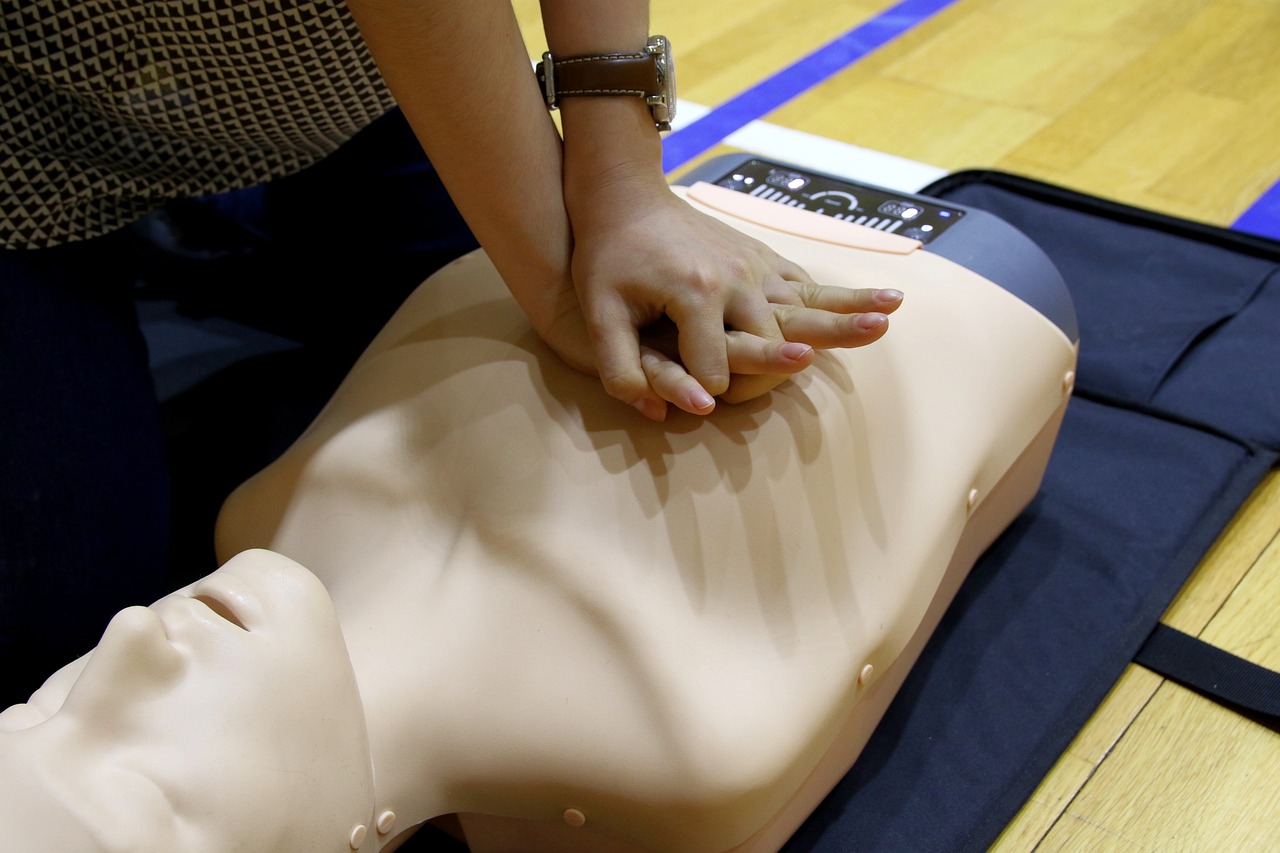
- Hands centered on the lower half of the sternum; shoulders over hands, elbows locked.
- Depth 2–2.4 inches (5–6 cm) at 100–120/min with full recoil and minimal interruptions.
- Use a metronome/feedback device to maintain rate, depth, and recoil quality.
- Ventilations:
- With two rescuers, provide 2 breaths after every 30 compressions until an advanced airway is placed.
- Ensure visible chest rise and avoid excessive volume; use a good mask seal and airway adjuncts as trained.
- Team Rotation: Rotate compressors every 2 minutes or sooner if fatigued, switching during rhythm checks to keep pauses under 10 seconds.
Step 5: AED Use and Shock Delivery
- Turn on the AED, place pads on a bare chest, and follow prompts.
- Leader calls “clear” before analysis and shock; ensure no contact with the patient.
- Resume compressions immediately after shock or if no shock advised; do not delay for pulse checks.
Step 6: Maintain Cycles and Prepare for Handoff
- Perform rhythm analysis about every 2 minutes, aligning compressor switches with the planned pause.
- Continue high‑performance CPR until clear signs of life, scene hazards, or advanced team takeover.
- Recorder tracks times, shocks, medications (if applicable), and events to streamline the handoff.
Team CPR: Roles and Leadership During a Code
Coordinated Team CPR hinges on a clear leader, defined roles, and disciplined choreography. The team leader assigns tasks, monitors performance quality, and keeps the group aligned with high-performance CPR priorities: strong compressions, timely ventilations, rapid defibrillation when indicated, and minimal pauses.
Core Role Assignments:
- Team Leader: Orchestrates the code, sets the tempo, announces cycle times, and ensures adherence to guidelines.
- Compressor 1 and 2: Deliver chest compressions and rotate every 2 minutes or sooner if fatigued to maintain depth and rate.
- Airway/Ventilator: Manages seal and ventilation cadence, synchronizing with compressions without causing excessive pauses.
- AED/Monitor Operator: Applies pads early, calls “clear,” initiates analysis/shock, and tracks rhythm-check timing.
- Recorder/Medication Runner: Documents times, doses, and events; prepares the code cart and supports logistics.
- Safety Officer: Confirms scene safety and electrical safety during defibrillation.
Sequence for Effective Team CPR:
- Leader announces scene overview and assigns roles immediately.
- Initiate compressions within seconds while AED/monitor is applied.
- Use closed-loop communication for every order and confirmation.
- Rotate compressors at the 2-minute mark with a planned, sub-5-second switch.
- Conduct rhythm checks quickly with the AED/monitor, minimizing no-flow time.
- Continue high-performance cycles and prepare for handoff to advanced teams.
High-Performance CPR: Cycles, Switching, and Compression Quality
High-performance Team CPR focuses on maximizing compression fraction and reducing delays. The leader sets the cadence and calls out timing markers so everyone anticipates rhythm checks and switches.
Execution Standards:
- Compression Rate/Depth: Maintain guideline-consistent rate with firm depth and full chest recoil, using feedback devices when available.
- Switch Timing:
- Every 2 minutes: Swap compressors at rhythm checks to avoid fatigue.
- Planned handoff: New compressor positions hands before the check to limit interruptions.
- Pulse/Rhythm Confirmation: Keep checks under 10 seconds; resume compressions immediately after the decision.
Cycle Flow:
- Compress for 2 minutes with the metronome guiding rate.
- Leader cues “prepare to switch” at 1:45.
- Quick rhythm check and immediate action (shock or continue CPR).
- Resume compressions without delay; airway maintains coordinated breaths.
- Reassess every 2 minutes with minimal pauses.
Closed-Loop Communication and Ventilation Integration
Team CPR performance rises when every command is acknowledged and repeated back. Closed-loop communication eliminates ambiguity, keeps the code cart organized, and ensures tasks are completed as intended.
- Command-Confirm-Report: Leader assigns a task; the rescuer repeats it back; the rescuer reports when it’s done.
- Checklist Discipline: Use brief prompts for pads, airway, oxygen, suction, and timing to prevent missed steps.
- Ventilation Coordination: Deliver controlled breaths with visible chest rise, avoiding hyperventilation that reduces coronary perfusion.
- Synchrony with Compressions: In basic two-rescuer scenarios, time ventilations to minimize interruptions; with an advanced airway, provide asynchronous breaths while compressions continue uninterrupted.
Use concise phrases, call out times, and keep the room quiet during rhythm analysis so critical cues are heard and acted upon.
Rhythm Checks, Pauses, and Smart Use of Technology
Brief, well-timed rhythm checks protect compression fraction. The AED or monitor operator announces readiness, the leader counts down, and the team pauses only long enough to analyze or deliver a shock.
- Minimize No-Flow Time: Keep all pauses under 10 seconds; resume compressions immediately after shock or analysis.
- Feedback Devices: Compression sensors and metronomes verify rate, depth, and recoil, enabling real-time corrections.
- Pad Placement and Safety: Apply pads early, confirm gel contact, and ensure everyone is clear before shocking.
- Data-Informed Coaching: The leader uses device feedback to cue deeper, faster, or slower compressions as needed.
While AED integration and airway techniques can be explored further on dedicated pages, Team CPR hinges on harmonizing these elements to keep blood flow continuous and effective.
Train Team CPR with Work Readiness
At Work Readiness, our Team CPR sessions emphasize leadership, role clarity, and choreography you can execute under pressure. You will:
- Assign roles quickly and run high-performance CPR cycles with precise 2-minute rotations
- Use closed-loop communication and concise checklists to prevent errors
- Integrate ventilations with compressions while minimizing interruptions
- Leverage feedback devices and metronomes to maintain optimal compression quality
Serving Cumming, GA and the greater Atlanta area—including Alpharetta, Duluth, Lawrenceville, Marietta, and beyond—we offer flexible scheduling, onsite group training, and immediate AHA eCard issuance upon successful completion.
Ready to Master Team CPR?
Call 770-878-3175 or email us to schedule your Team CPR training today. Our courses run 7 days a week, with blended learning options and hands-on team-based practice designed to improve real-world resuscitation performance.