
BLS Skills Testing: Hands-On Evaluation for Adult, Child, and Infant Resuscitation
Prepare for your BLS skills check with clear, scenario-based testing at Work Readiness Center. Demonstrate mastery of 2025 AHA performance standards in Atlanta and leave confident you can perform when seconds matter.
BLS Skills Testing: What to Expect in Your Practical Evaluation
BLS skills testing is a structured, hands-on assessment that verifies you can deliver high-quality CPR and use an AED correctly under pressure. Aligned with the 2025 American Heart Association (AHA) Guidelines, the evaluation uses objective checklists to measure compression depth and rate, full chest recoil, effective ventilations, timely AED operation, and safe, coordinated team actions.
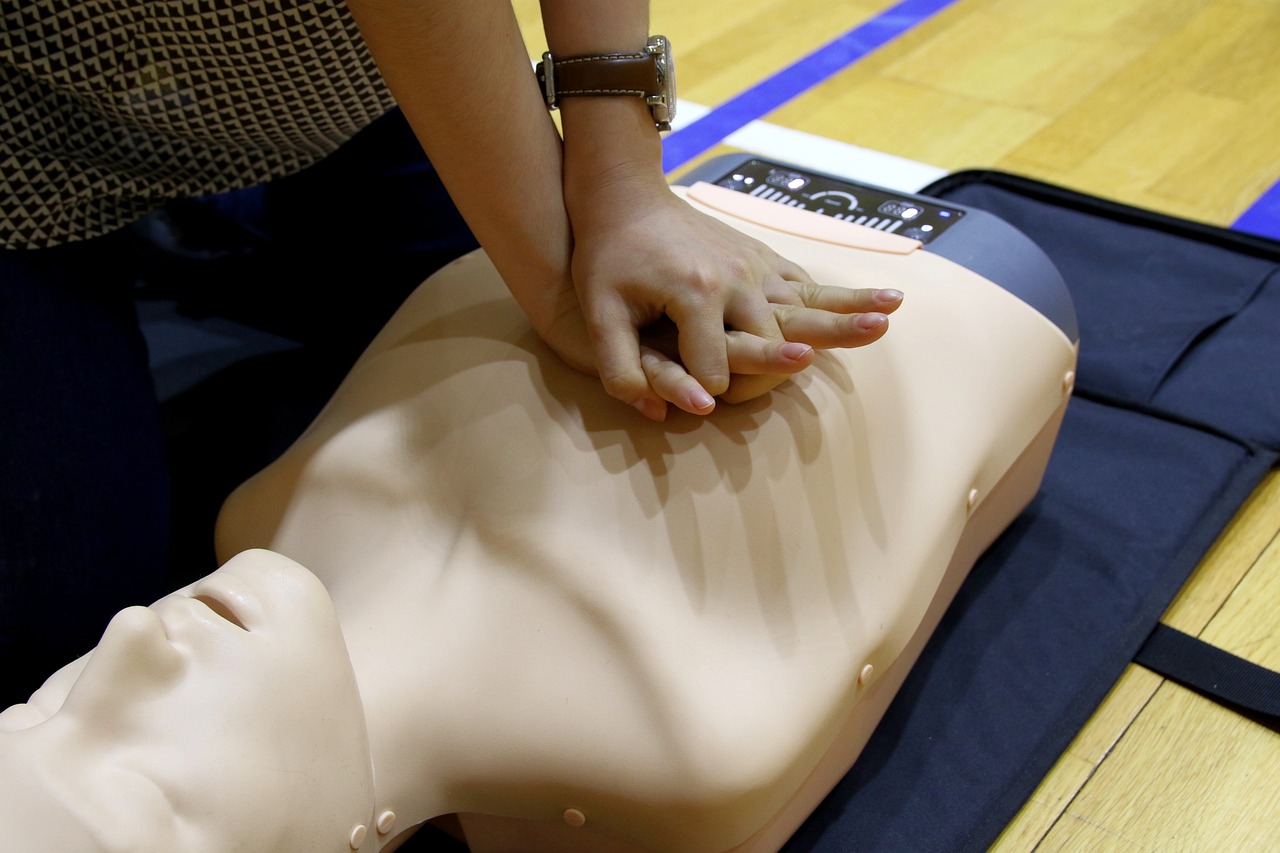
At Work Readiness Center, an Official American Heart Association (AHA) Training Center serving Cumming, GA and the greater Atlanta metro area, candidates rotate through realistic stations using manikins with feedback technology, AED trainers, and time-bound scenarios. Adult, child, and infant stations are included so you’re assessed on the precise techniques and performance targets for each age group.
How BLS Skills Testing Is Structured
Your test follows a scenario-based flow that simulates an actual emergency from first contact to ongoing care, allowing evaluators to observe critical actions and decision-making.
Core components assessed include:
- Scene safety and responsiveness check
- Activation of emergency response systems
- Simultaneous breathing and pulse assessment (≤10 seconds)
- High-quality CPR with correct compression depth, rate, and recoil
- Prompt AED use with minimal pauses and safe shock delivery
- Continuous cycles with role clarity and communication
Examiners emphasize minimizing interruptions, hitting 2–2.4 inches compression depth at 100–120/min with full recoil, and integrating the AED rapidly to achieve the earliest possible first shock when indicated.
Adult BLS Skills Station: Criteria and Scenario Flow
The adult skills station evaluates your ability to manage an unresponsive, pulseless adult using a timed, checklist-driven scenario. Here is how the evaluation typically progresses:
Phase 1: Initial Approach and Assessment
- Establish scene safety and put on PPE.
- Check responsiveness with a shoulder tap and shout.
- Call for help and direct a bystander to activate emergency response and bring an AED.
Phase 2: Breathing and Pulse Check (≤10 Seconds)
- Assess breathing and carotid pulse simultaneously for no more than 10 seconds.
- On no pulse or abnormal breathing (gasping), announce cardiac arrest and start compressions.
Phase 3: Compressions—Measured Performance
- Chest Compressions:
- Hand placement on the lower half of the sternum with shoulders over hands and straight arms.
- Depth consistently 2–2.4 inches (5–6 cm) with full chest recoil each compression.
- Rate maintained at 100–120/min with minimal interruptions (<10 seconds).
- Use of feedback device data (if available) to maintain targets.
- Ventilations:
- After 30 compressions, open the airway and deliver 2 breaths over 1 second each.
- Provide just enough volume to see visible chest rise without excessive ventilation.
- Compression-to-Breath Ratio: 30:2 for a single rescuer.
Phase 4: AED Integration and Timing
- Power on the AED promptly when it arrives and attach pads to a bare, dry chest as indicated.
- Follow prompts; ensure everyone is clear during rhythm analysis and before shock.
- Deliver shock as advised and resume compressions immediately within 10 seconds.
Phase 5: Ongoing Cycles and Reassessment
- Continue 30:2 cycles with reanalysis every 2 minutes per device prompts.
- Verbalize transitions when additional rescuers arrive to maintain compression quality and minimize pauses.
- Testing ends when the evaluator calls stop, or when care is transferred per scenario.
Skills Testing Ideal For:
- Doctor
- Dentist
- Nurse
- Dental Hygienist
- Medical Assistances
- EMTs
- Nurses
- CNA
- Physical Therapist
- Pharmacist
- EMT
- Medical Personnel
Any one that works in a Hospital.
Traditional Class
Length of Class: up to 2.5-3 hours
Includes: Adult Child and Infant training
Certification: American Heart Association Two Year Certification
Course Meets: Medical, State, Federal and OSHA Requirements
The American Heart Association (AHA) Heartsaver® certified BLS course at Work Readiness combines instruction with a formal skills test to validate performance on objective criteria. During the evaluation, you will perform compressions at 2–2.4 inches deep and 100–120/min with full recoil, deliver ventilations that produce visible chest rise without over-ventilating, and operate an AED to achieve a rapid time-to-first-shock when indicated. Examiners use scenario-based checklists and, when available, feedback manikins to confirm consistency and quality.
Candidates who require remediation receive targeted coaching on common issues such as shallow compressions, slow rates, incomplete recoil, mask seal and ventilation volume errors, and AED pad placement or safety prompts. Retesting focuses on the corrected skills to confirm competency. Successful completion of the skills demonstration results in a BLS course completion card that is valid for two years.
BLS Healthcare Provider
- American Heart Association Two Year Certification Hands on Training eCard Fast Validation
Child BLS Skills Testing: What to Expect (Ages 1 Year to Puberty)
During BLS skills testing for children, evaluators focus on how accurately you apply pediatric resuscitation techniques under time pressure. While the overall sequence mirrors adult care, assessors look for child-specific adjustments that reflect pediatric anatomy and physiology.
Child-Specific Performance Criteria:
- Compression Depth: Approximately 2 inches (5 cm), or one-third of the chest, consistently maintained across cycles.
- Hand Placement: One or two hands centered on the lower half of the sternum, chosen appropriately for the child’s size.
- Compression-to-Breath Ratio:
- Single rescuer: 30:2 with minimal interruptions.
- Two rescuers: 15:2 with clear role assignment and switch timing.
- Pulse Check: Carotid or femoral pulse assessed in under 10 seconds with immediate action based on findings.
Testing Station Flow:
- Confirm scene safety and responsiveness, verbalizing findings to the evaluator.
- Activate emergency response and direct retrieval of an AED without delaying compressions.
- Assess breathing and pulse within 10 seconds; begin compressions if no normal breathing and no pulse.
- Deliver compressions at 100–120/min with full recoil and the correct ratio for the scenario.
- Apply and operate the AED promptly when it arrives, following prompts and ensuring pad placement suitable for pediatrics.
- Continue cycles with minimal pauses until the evaluator ends the scenario.
Infant BLS Skills Testing: Under 1 Year
Infant BLS testing focuses on precision with small chest volumes and delicate structures. Examiners use an objective checklist to verify correct techniques, timing, and equipment use for infants.
Infant-Specific Performance Criteria:
- Compression Depth: About 1.5 inches (4 cm), or one-third of the chest, with full recoil between compressions.
- Hand Placement:
- Two-thumb encircling technique: Preferred for two-rescuer testing; thumbs on the center of the chest with hands encircling the thorax.
- Two-finger technique: Acceptable for single rescuer when encircling is not feasible.
- Compression-to-Breath Ratio:
- Single rescuer: 30:2 with effective ventilations showing gentle chest rise.
- Two rescuers: 15:2 with smooth role transitions and coordinated counts.
- Pulse Check: Brachial pulse evaluated in less than 10 seconds, moving to compressions if absent or under 60/min with signs of poor perfusion.
Testing Station Flow:
- Ensure scene safety and check responsiveness by tapping the foot and calling out.
- Activate help according to the scenario:
- Witnessed collapse: Call 911 and obtain an AED immediately, then return to begin compressions.
- Unwitnessed collapse: Perform about 2 minutes (5 cycles) of CPR before leaving to get help and an AED.
- Assess breathing and brachial pulse quickly; start compressions without delay when indicated.
- Perform compressions at a 100–120/min rate with correct depth, minimal pauses, and proper ventilation technique.
- Apply an AED as soon as it arrives, using pediatric pads when available or adult pads positioned to avoid overlap.
- Continue CPR and follow AED prompts until the evaluator concludes the assessment.
2025 AHA-Aligned Focus Areas in BLS Skills Testing
Current testing at Work Readiness aligns with recent AHA emphases that sharpen performance standards and reduce variability across exam sessions. Candidates are scored against measurable criteria that reflect these priorities:
- High-quality compressions: Maintain 100–120/min, 2–2.4 inches for adults (child/infant as specified), minimal interruptions, and complete chest recoil.
- Clear AED workflow: Rapid power-on, pad placement, safety checks, and time-to-first-shock targets with confident voice commands.
- Ventilation accuracy: Deliver just enough volume to achieve visible chest rise, one second per breath, avoiding over-ventilation.
- Team coordination: Defined roles, closed-loop communication, and efficient switch timing during multi-rescuer scenarios.
These focus areas do not change the core sequence of care; they tighten execution standards so performance can be evaluated consistently across candidates and scenarios.
Frequent Errors Observed During Skills Testing
Under exam pressure, small deviations can lead to remediation. Avoid these pitfalls to protect your score:
- Slow start to compressions: Exceeding the 10-second assessment window before initiating CPR.
- Excessive pauses: Letting breaks for breaths, analyses, or switches run longer than 10 seconds.
- Shallow or excessive depth: Missing the target range (e.g., 2–2.4 inches for adults) or failing to allow full recoil.
- Over-ventilation: Delivering volumes that cause gastric inflation or rapid rates that disrupt compression fractions.
- Poor AED pad placement: Misaligned pads, placing over patches or devices, or delaying shock delivery beyond reasonable time goals.
Hands-On BLS Skills Testing with Work Readiness Center
At Work Readiness Center, your skills test uses feedback manikins and AED trainers to capture objective metrics on compression depth, rate, recoil, and ventilation. You will practice and be assessed on:
- Rapid recognition and initiation of compressions within time limits
- Consistent compression quality with proper depth, rate, and recoil
- Efficient AED operation from power-on to safe shock delivery
- Team-based role clarity and smooth rescuer switches
Serving Cumming, GA and the greater Atlanta area—including Alpharetta, Duluth, Lawrenceville, Marietta, and beyond—we offer flexible scheduling, onsite group sessions, objective checklists, immediate feedback, and prompt eCard issuance upon successful completion.
Ready to Pass Your BLS Skills Test?
Call 770-878-3175 or email us to reserve a testing slot with Work Readiness. Sessions run 7 days a week, including blended learning with focused hands-on evaluation, remediation guidance when needed, and fast certification turnaround.